Ask Maps SEO: How to Win When Google Maps Answers Instead of Listing
Google Maps answers customer questions instead of listing businesses. My 5-step Ask Maps playbook for local SEO, from a Winnipeg clinic case.
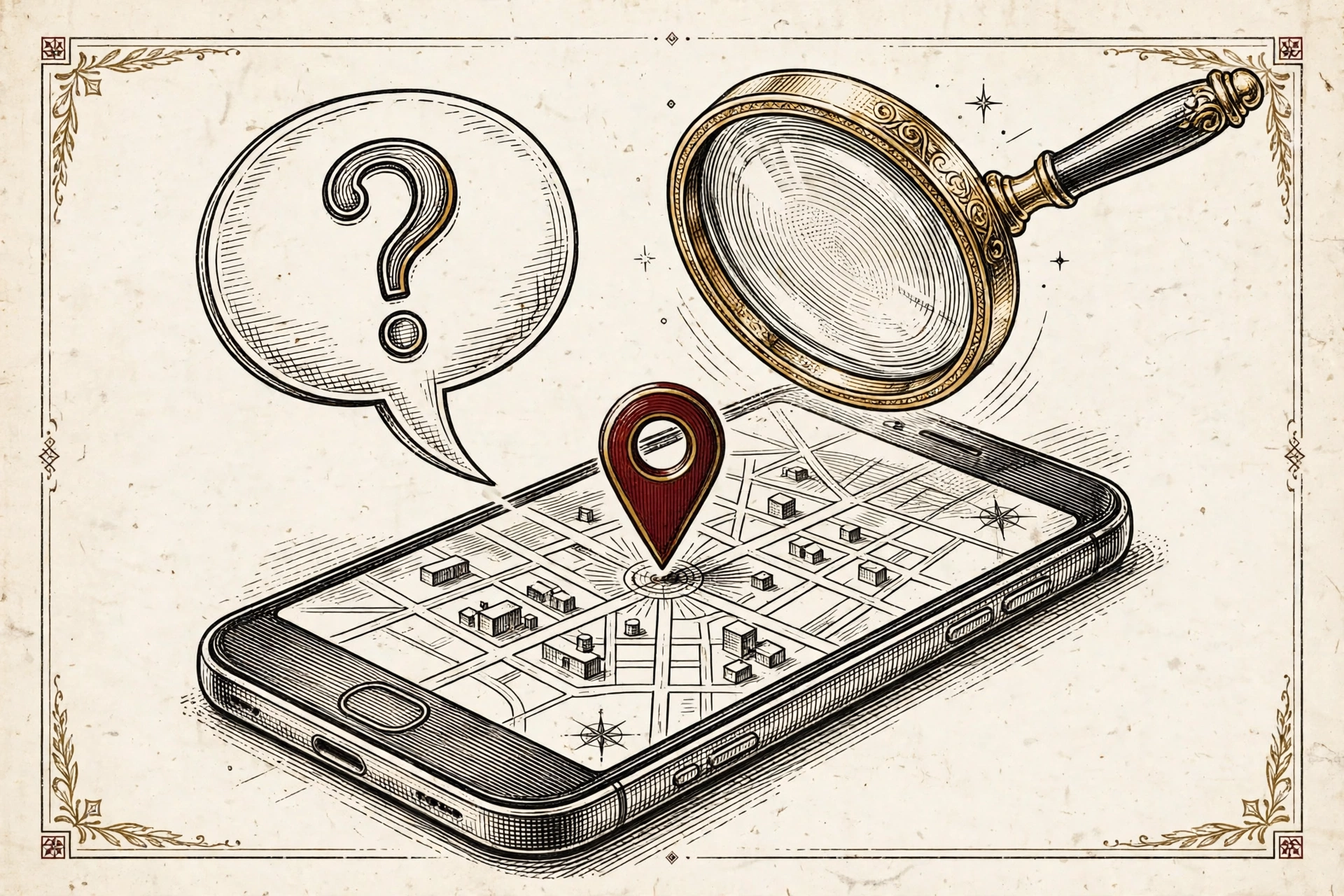
Google Maps has a conversational layer called Ask Maps, and it answers customer questions with a direct recommendation instead of a list of pins. Google launched it in March 2026, powered by Gemini, rolling out first in the United States and India. Search Engine Land just ran a breakdown of what it means for local SEO. Google matches businesses to a customer's specific situation, not to their keywords.
I run local SEO for clients at First Rank. I test this the way I test everything. I run the actual questions and write down who shows up.
Google needs detail about you before it can recommend you
The fundamentals still apply. Google scores local results on relevance, distance, and prominence. Conversational search adds a harder relevance test on top. A short query like "Italian restaurant near me" can match on category and distance. A real customer question carries constraints: a quiet room for a client dinner, parking for a crew truck, evening appointments. Google can only match those constraints if it has the detail somewhere. That detail comes from your profile attributes, your photos, your reviews, and your website copy.
Most local profiles fail this test. The owner picked a category, wrote a one-line description, and stopped. Under keyword search, that profile could still rank. Under a question, it gives the model nothing to match.
Google reads review text for this detail too. Customers write the specifics that no attribute checkbox captures, like the situations they came in for and how the business handled them. That language has always helped conversions. Now it also helps the model decide whether you fit a question. Read your last 50 reviews and your competitors' reviews with that in mind. Any reason that shows up repeatedly in reviews and nowhere in your profile copy is a gap.
I saw this gap cost a business calls. A Winnipeg therapy clinic had strong reviews, and the same two themes kept repeating: evening availability and the particular session style clients described. Neither appeared in the clinic's service descriptions or profile copy. During the engagement I rewrote those around the clients' own language and completed the profile, and calls rose 300% over the engagement. I will not pretend the review-language rewrite alone produced all of that. It was one lever in a full profile rebuild, and there is no control group. That is the mechanism. The detail Google needed was already in the reviews. It just was not written anywhere Google could read it. That was standard local SEO work years before Ask Maps existed. Conversational matching makes the same discipline worth more, because customers now get that detail matched for them.

The answer changes with the person asking
Conversational search adds a second layer. Not all context comes from the question. Ask Maps can draw on places someone searched or saved, dietary preferences, and real-time signals like how busy a place is, hotel availability, or transit updates. Through Personal Intelligence, users can connect Gmail, with Calendar expected to follow, so existing plans like flights and dinner reservations become part of the context too. The recommendation depends on the query plus the person, their time, their preferences, and their plans.
This is the same measurement problem I wrote about in my post on AI visibility scores. A single rank check shows you where you stand on the fundamentals. It cannot show you what a logged-in customer with a search history sees. So run two views. Keep a fixed set of five to ten conversational questions, run them monthly from a stable logged-in test account, and write down who appears. Then run the same set logged out as a baseline. The logged-out view shows fundamentals. The logged-in view shows what personalized recommendation looks like. Rank tracking is not dead. One view is no longer the whole story.
The playbook
1. Ask the questions your customers ask. Open Maps and type the way a customer talks. Not "furnace repair Winnipeg." Try "who fixes furnaces in Winnipeg the same night?" or "therapist in Winnipeg with evening appointments." One note before you test: Google rolled this out first in the US and India, and PPC Land reports it expanded to Canada and more than 150 other countries and territories in August 2026. Still, check whether it is live on your own phone before you build around it. For each question, log which businesses appear and what their profiles and reviews say that yours does not.
2. Mine your reviews for decision phrases. List the reasons customers keep repeating in your reviews and your competitors' reviews: speed, a specialty, a situation. Then check your profile and service pages for each one. Gemini matches on that customer language. If the words live only in reviews, they can still feed the model, but if they live in your structured services and attributes too, you have given Google the match in a form it can read directly.
3. Complete the attribute layer. Fill in categories, services, hours, special hours, amenities, accessibility, and photos that verify features like outdoor seating. The business profile has become the data layer that feeds AI, Maps, and Search, as PPC Land documented. Every empty field is a question the model cannot answer in your favor. I wrote in September that your profile is your homepage. Ask Maps turns that from a positioning argument into a matching mechanism.
4. Write service pages as answers. A furnace company that says "flexible scheduling available" loses to the competitor whose page answers "do you offer same-night repair," "what do you charge for a service call," and "do you service older Bryant units." You do not need a page per question. Your main service pages should answer the questions that could change someone's decision.
5. Make the action work from the profile. The old path was search, compare, visit your website, then act. Ask Maps shortens it. Users can already book restaurant reservations, save places, get directions, and start navigating from inside the conversation, and Google keeps adding transactions like hotel price comparisons, ticket links, and, in the US, food ordering. Anything that forces the customer out of Maps is a step where you can lose them. Make sure booking links, hours, and ordering work from the profile itself.
The part none of this fixes
If your hours are wrong, your profile is half empty, or your website says nothing useful, no AI-specific tactic saves you. Relevance, distance, and prominence still decide the outcome. Conversational search then runs one more test, whether this business fits what this person needs right now.
This week, ask Maps three questions the way your customers would ask them. Write down who shows up and what those businesses say that you do not. Fix that before you spend anything on more citations. Being nearby still matters. Being described well enough to get recommended matters more. And if the feature is not live on your phone yet in Canada, the review-mining and attribute work is still the right move. It was the right move when it lifted a clinic's calls 300%. The questions are just catching up to it.

About the author
Dalin de Graff is a digital marketing expert based in Winnipeg, Canada, with 9 years of experience across SEO, GEO, and AI search. At First Rank, he built the agency's GEO practice and leads its work on AI search and LLM visibility. His results include +311% organic clicks, +300% calls, and +98% AI search traffic in 30 days. He writes about search, AI, and marketing at dalindegraff.com.