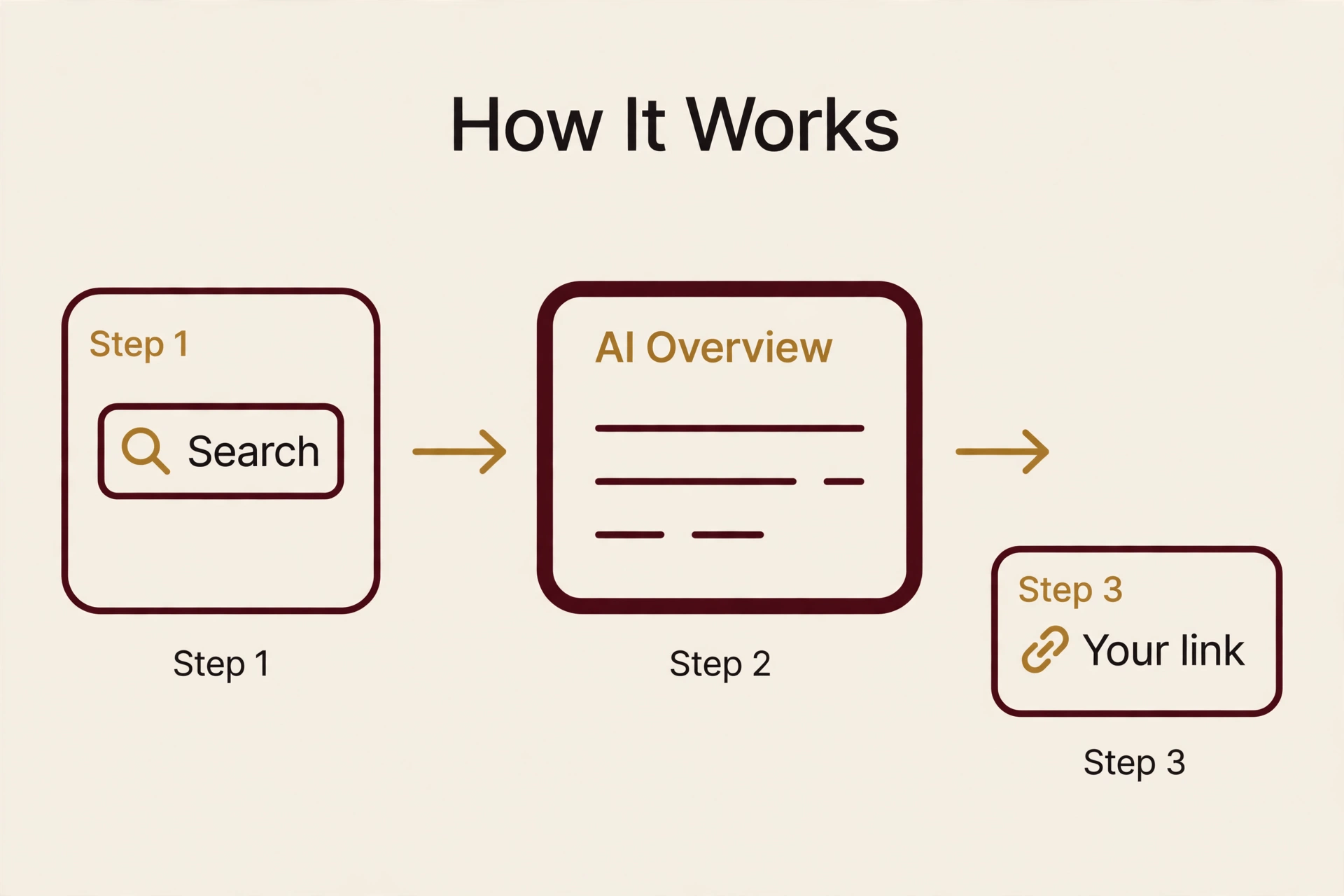
The 40% Click Loss Is Causal Where Overviews Appear. Your Dashboard Still Cannot See It.
A randomized experiment put a causal number on AI Overview click loss. Google will not give you your own AI click rate, so measure outcomes per page.
For two years, every claim about AI Overviews and lost traffic ran into the same reply. Correlation is not causation. That reply no longer works. A randomized field experiment has put a causal number on the loss: 39.8%. My stance is plain. Stop reporting AI exposure as a win. Treat it as a cost to measure, page by page, in clicks and in outcomes, because Google's own reporting will not do that measurement for you.
The randomized experiment
Saharsh Agarwal of the Indian School of Business and Ananya Sen of Carnegie Mellon University ran the experiment with a Chrome extension and 1,065 United States desktop Chrome users recruited through Prolific. Each participant used the extension for two weeks between January and February 2026. The researchers pre-registered the design and assigned users at random to normal Search or hidden AI Overviews. A third, exploratory AI Mode arm had higher attrition. The control and Hide-AIO groups differed in one systematic way, whether an overview that would have appeared was shown or suppressed.
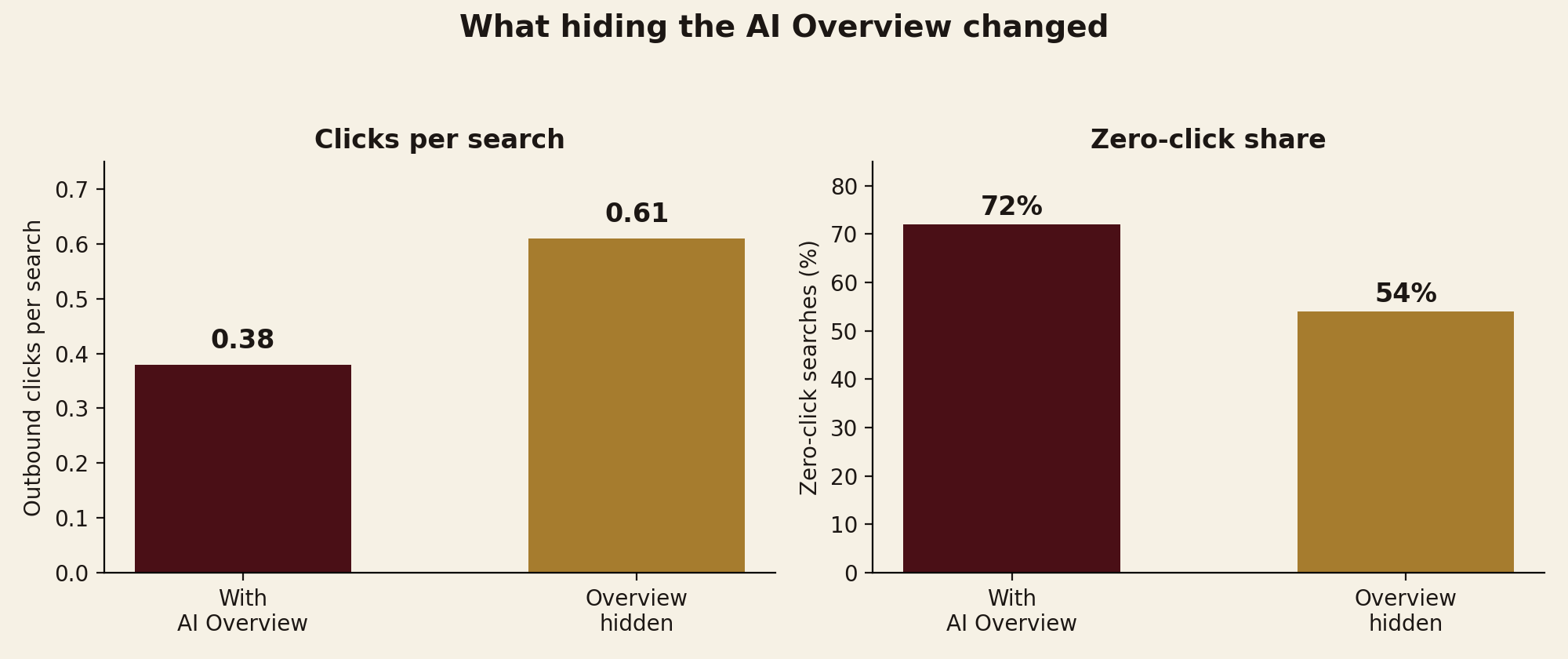
On queries where an overview was meant to appear, showing it cut outbound organic clicks by 39.8% and raised zero-click searches by 34.5%, according to the paper. Search Engine Journal headlines the same result at 38% from rounded raw means, 0.38 clicks per search with overviews shown against 0.61 with them hidden. I quote the paper's 39.8%. Overviews appeared on 42% of queries in the sample, and they sat in the top position 85% of the time. Removing a top-position overview nearly doubled outbound clicks, while removing a lower-position overview had no measurable effect. That is roughly 17% fewer outbound clicks across all searches (39.8% of the 42% triggered share). Informational queries drove the result, while navigational and transactional estimates could not be distinguished from zero, according to PPC Land's account of the paper.
Two findings undercut the usual defence. Sponsored clicks did not move, and search frequency did not move, so the overview substituted for organic visits. Returned clicks looked the same on bounce, back-navigation, and time on site. The endline survey found no measurable difference in satisfaction, perceived information quality, or ease of finding information. The authors' conclusion, in their wording, is that the results suggest AI Overviews divert traffic away from publishers without delivering measurable improvements in user experience. In the authors' own account, citations accounted for about 8% of clicks in the study.
The paper is a draft on SSRN, not peer-reviewed work, and the sample is United States desktop Chrome users over a short window. PPC Land's account of the paper describes a placebo check: on queries where no overview was triggered, clicks did not differ between the groups.
Why Google's own report cannot settle your number
Google announced generative AI performance reports in Search Console on June 3, 2026 for a subset of sites, and rolled them out worldwide on August 31, 2026. The Search report shows impressions inside AI Overviews and AI Mode, broken down by page, country, device, and date. It shows no clicks, no click-through rate, and no queries. Clicks on links inside AI Overviews and AI Mode are counted, but they land in the main Performance report inside the Web search type, blended with classic blue-link clicks, with no filter to separate them. You have two numbers from different reports, and dividing one by the other does not produce an honest AI click-through rate.
An impression means Google showed your link inside an AI feature, not that a searcher clicked, visited, or bought.
Google's October 15, 2026 link changes do not close the gap either. Google said it is placing inline links higher and more often and testing a top section for one or two official sites. The company also said use of its Preferred Sources feature grew more than sevenfold since the start of the year. That figure is an adoption count, how many people turned a setting on, not a click or traffic number. No click figures accompanied the October changes. Report higher placement only after you test it against clicks. My earlier post on commercial AI Overviews showed the buying comparison now happens inside the answer rather than on the linked pages.
The measurement I run instead
I run a fixed prompt panel every Monday at First Rank, where I work as an SEO and GEO strategist. The panel asks the same buying and service questions each week across ChatGPT, Gemini, Perplexity, and Claude, logged in and logged out, and records whether the answer names a brand, cites a page, links to it, or sends the task to a booking page. A citation with no click and a citation that books a call look identical in an impressions report. The panel is a triage tool, not a replication of the experiment, and buying and service questions may show a smaller effect than the informational-query headline.
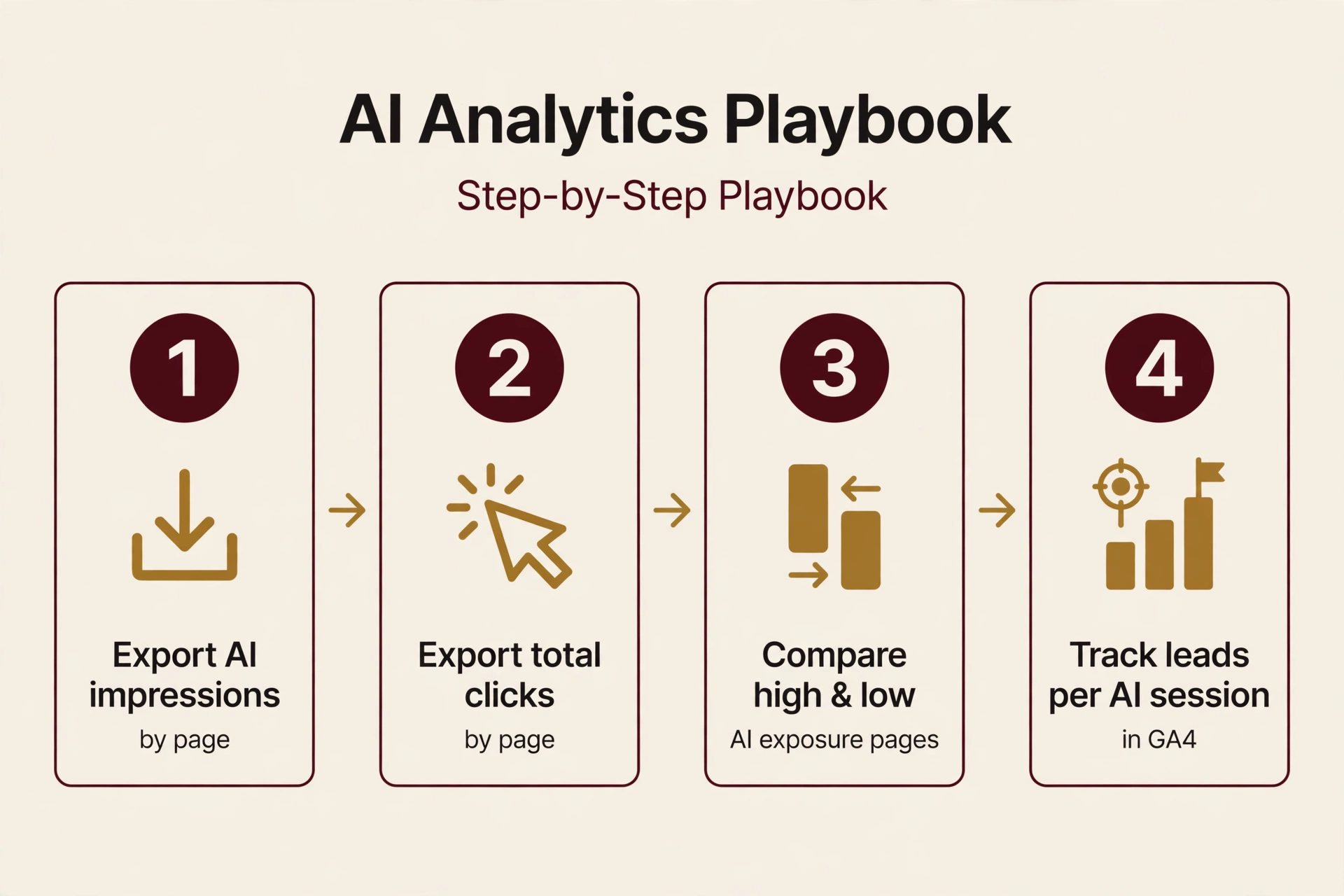
For a client site, I run four steps on the same date range, in this order. First, export AI impressions by page from the generative AI report. Second, export total clicks and impressions by page from the main Performance report for the same dates. Third, split pages into high AI exposure and low AI exposure and compare their click trends. A high-exposure page whose clicks fall while its AI impressions rise is a candidate for AI-driven loss, against a steady low-exposure control. Fourth, in GA4, split AI referrals from other channels and track leads or sales per session. The conversion study I covered in October is the reason for that fourth step.
That discipline is behind a GEO sprint at First Rank that lifted LLM search traffic 98% in 30 days. The sprint fixed pages the panel showed were described by other sites and judged the work on referral sessions and enquiries. A Winnipeg therapy clinic I have written about before grew calls 300% through local search work. Calls were the metric that mattered, because a clinic does not pay rent with impressions. If your AI impressions rise and your calls, bookings, or sales per AI session do not, price that exposure as branding, not SEO growth. I publish the running series behind this method on dalindegraff.com.
Opting out removes the impressions and the citations together. The authors, writing about the experiment, note publishers could face uncertainty about how opting out affects ordinary rankings, even though Google says the control is not a ranking signal for ordinary results. For each money page, name its required outcome, its current AI exposure, and its comparison page.
Which page on your site gained the most AI impressions last month, and what did that page convert?

About the author
Dalin de Graff is a digital marketing expert based in Winnipeg, Canada, with 9 years of experience across SEO, GEO, and AI search. At First Rank, he built the agency's GEO practice and leads its work on AI search and LLM visibility. His results include +311% organic clicks, +300% calls, and +98% AI search traffic in 30 days. He writes about search, AI, and marketing at dalindegraff.com.