Yahoo Rebuilt Search Around Scout. Its 2.5% Share Is Not the Story.
Yahoo ended its 16-year Bing deal and rebuilt search around Scout. Its 2.5% share is the wrong number. The test is whether its citations send clicks.
On November 10, Yahoo ended an arrangement that had lasted 16 years. Bing had supplied Yahoo Search results since August 2010. Yahoo replaced it with Scout, its own AI answer engine, and rebuilt Yahoo Search around a toggle between classic results and a Scout answer. Yahoo calls the rebuild Pivot Search.
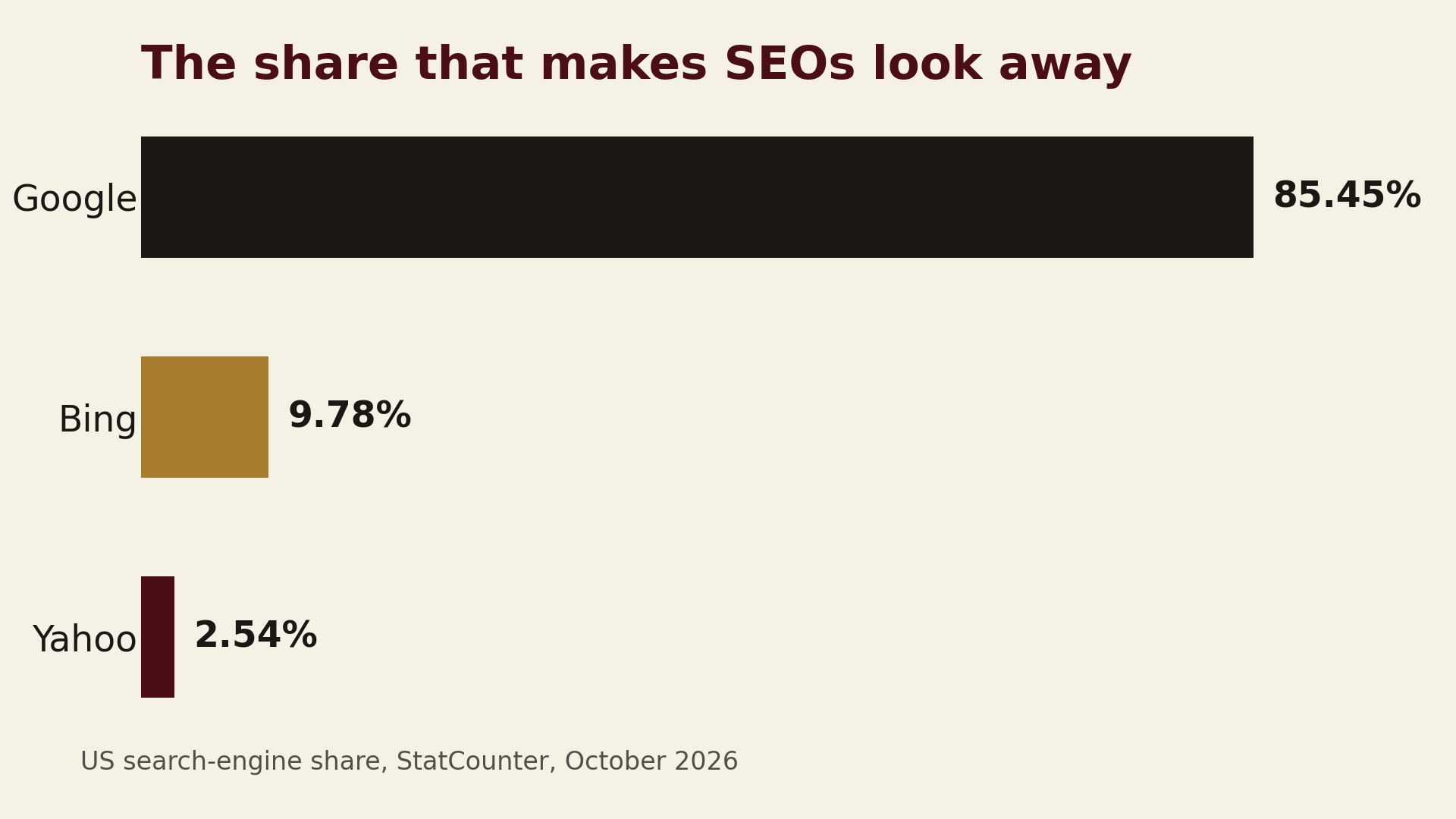
StatCounter's October 2026 estimate put Yahoo at 2.54% of US search share, against 85.45% for Google and 9.78% for Bing. That number answers the wrong question. The question that matters is where Scout answers now appear, and whether the citations inside them send clicks. Yahoo Finance, Yahoo Sports, Yahoo News and the Firefox sidebar put Scout in front of readers who never open Yahoo Search. That distribution is testable now while the engine is still small.
The query decides the page
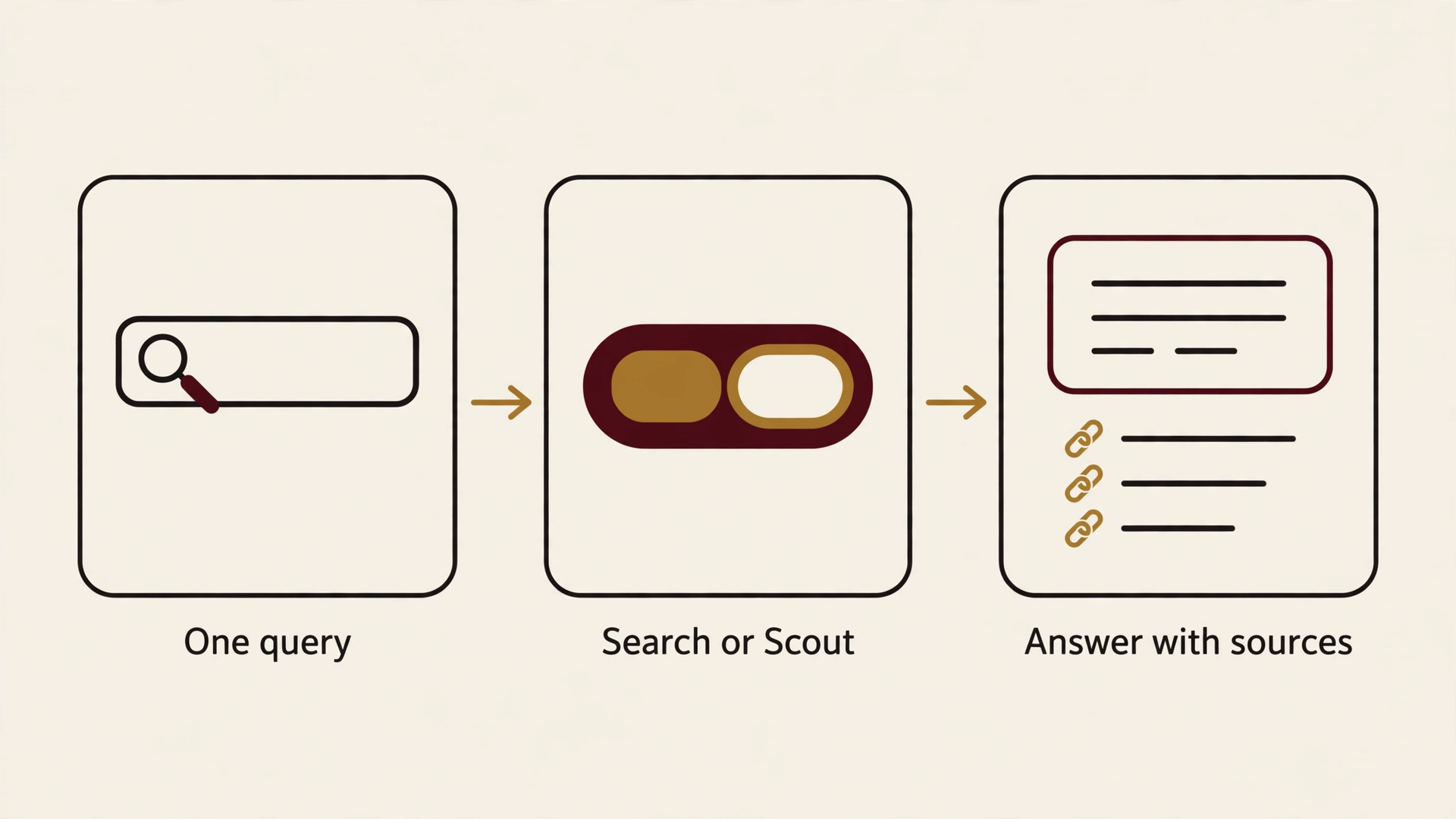
Pivot Search starts with one input field and a choice beneath it: Search or Scout. Pick Search and Yahoo builds a results page of quick facts, links and short AI summaries. Pick Scout and the same query becomes a conversation with inline source links.
The layout changes with the query. Yahoo's Eric Feng, senior vice president and general manager of the Yahoo Research Group, showed the two cases in a demo to Fast Company. Search for Netflix and Yahoo assumes the reader wants to reach Netflix, so the AI answer sits far down the page. Ask how to calculate compound interest and the explanation leads, because the reader needs to understand the answer first. For comparison or step-by-step questions, the search suggestions offer a Scout answer.
Google made the same bet in the other direction on November 2, moving brand AI Overviews into the right-hand column on desktop, out of the way of the links. I covered that move in my post on Google moving brand AI Overviews to the side column. On both sides now, for the queries where it applies, the query decides how much answer and how much list the reader sees, and the citation moves with the layout. Scout also remembers past activity through Memories, which users can view, delete or opt out of.
The models behind Scout are rented, and you cannot see which one answered
Scout started as a standalone answer engine built on Yahoo's knowledge graph, powered by Bing and Anthropic's Claude. Yahoo has since swapped the single Claude model for several third-party models, including Google's Gemini, each assigned to the query type it handles best, according to Feng.
My October post on the hidden model variable in AI visibility showed that citation behaviour can change when the model behind the answer changes, and that no tool I know of records which one it was. Scout extends the problem to a fifth engine. Yahoo has not said it will disclose which model answered a given question, so the same question can get a different source list depending on routing the reader never observes. A panel that checks Scout once, in one session, will record routing noise as if it were a result. The models are rented, and advertising pays the bill. The citation promise below needs a measurement.
The promise to test: more prominent citations
Yahoo says it built Scout to make links and sources more prominent than any other AI answer engine, to help readers trust the answer, reach the next step across the open web, and send traffic back to publishers. That is Yahoo's claim, and no referral data comes with it. The more than 3 billion answers Yahoo reports since the January beta is Yahoo's own count, not an independent measure of people, sessions or clicks.
Scout is now integrated within Yahoo Finance, Sports and News. On Yahoo Finance, a reader can ask what is behind a stock's move today and get an answer next to the stock. On Yahoo Sports, a reader can ask how a win affects the playoff race. Scout also lives in Mozilla's Firefox, where US desktop users can select it in the built-in AI sidebar. A Scout answer inside Yahoo Finance reaches an investor reading about a stock, not a searcher typing a query. That is a different audience from the one a search panel measures, and it is the audience a finance, consumer or B2B brand wants to be cited in front of.
Canadian readers hit one limit. Yahoo lists the new search experience for the US, UK, Europe and Switzerland, and the Scout app for the US only, so I will run the Scout side of the panel in a US session and label those results as such.
Measure Scout while it is cheap
I am adding Scout as a fifth engine to the panel I already run: the same five money questions, three samples each, logged in and clean, across ChatGPT, Gemini, Perplexity, Claude and now Scout, logging the cited page, named brand and page type for each answer. The first Scout question is the one Finance readers ask. What moved a stock today, and which source does Scout name first?
| Engine | Where the answer reaches readers | What I log for each answer |
|---|---|---|
| ChatGPT | Chat, search, apps | Cited page, named brand, page type |
| Gemini, AI Mode, AI Overviews | Google Search | Cited page, named brand, page type |
| Perplexity | Chat, search | Cited page, named brand, page type |
| Claude | Chat | Cited page, named brand, page type |
| Yahoo Scout | Yahoo Search, Finance, Sports, News, Firefox sidebar | Cited page, named brand, page type, plus surface |
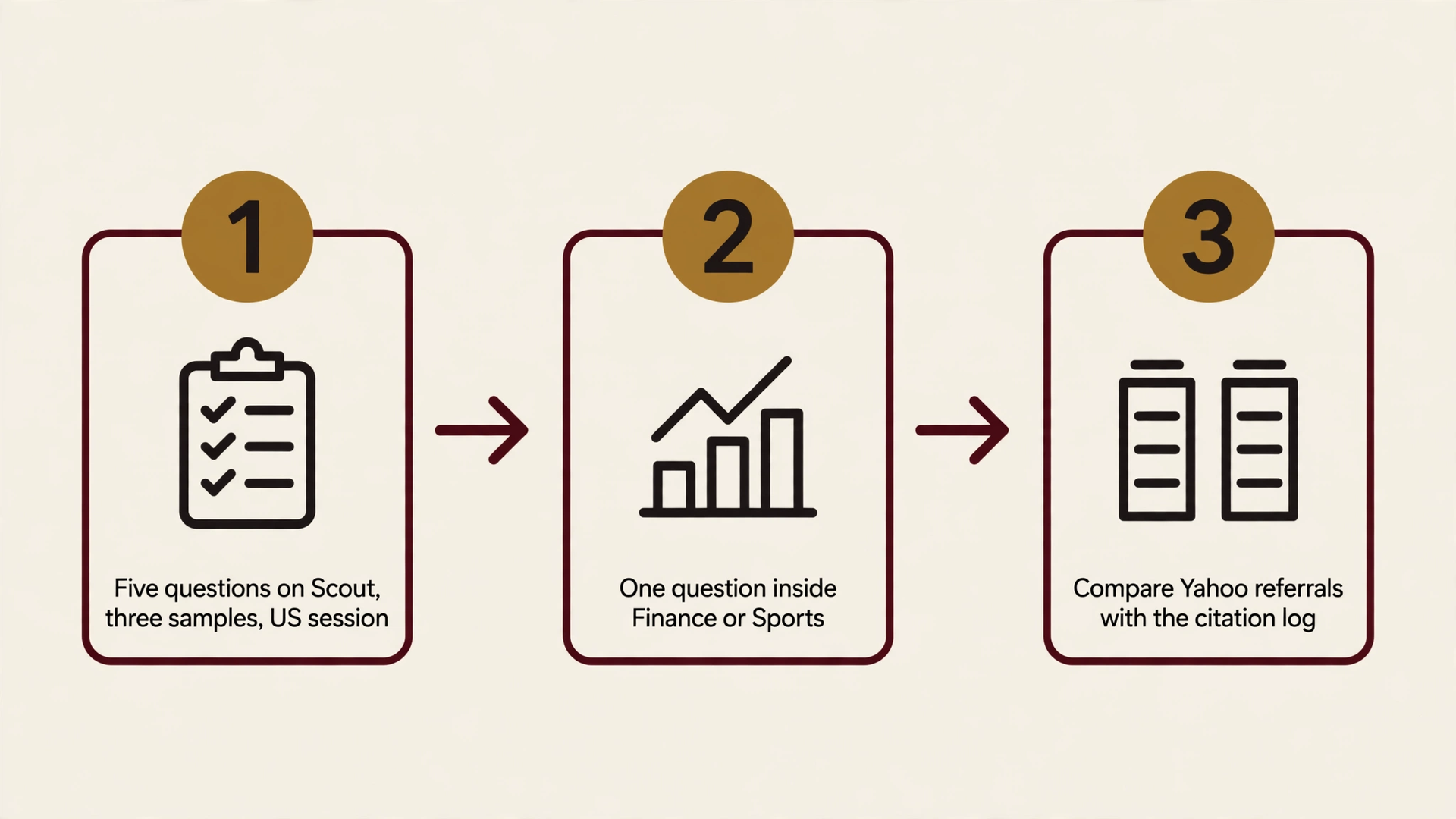
Three moves follow from the table. First, run the five questions on Scout in a US session, three samples each, and log whether Scout names your brand, quotes your page, or sends the reader to a competitor. Second, ask one question inside Yahoo Finance or Yahoo Sports where your buyers already read, and note whether Scout names you there. A citation on a page your buyers read is worth more than a citation on a search page they never open. Third, watch the AI referral split in GA4 for Yahoo traffic and compare it with the citation log. If Scout cites you often and sends nothing, the prominence claim is decoration. If it cites you rarely and sends clicks anyway, the surface matters more than the citation count.
Adding one engine to a panel I already run costs an afternoon. Discovering it matters in a year costs a year of citations I never saw.

About the author
Dalin de Graff is a digital marketing expert based in Winnipeg, Canada, with 9 years of experience across SEO, GEO, and AI search. At First Rank, he built the agency's GEO practice and leads its work on AI search and LLM visibility. His results include +311% organic clicks, +300% calls, and +98% AI search traffic in 30 days. He writes about search, AI, and marketing at dalindegraff.com.