ChatGPT Opened a Business Hub. Claim It Under Your Own Name.
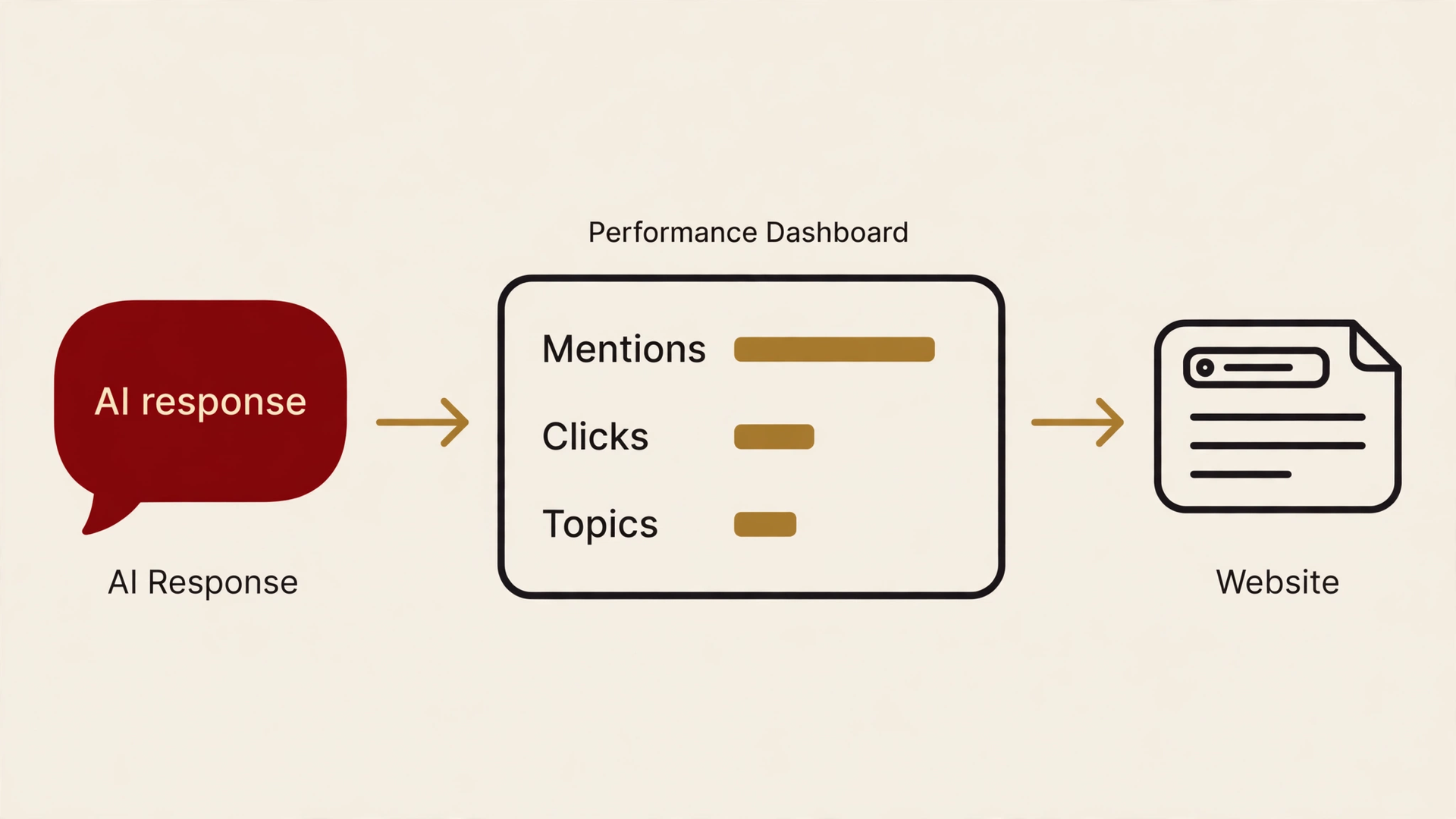
OpenAI's Business Hub shows how often ChatGPT mentions your site and the clicks that follow. Claim it under your own name and read the four numbers right.
On November 10, OpenAI gave business owners a number they never had. ChatGPT now reports how often it mentions a business, and how many clicks follow. Businesses in ChatGPT is a free beta. The dashboard behind it, Business Hub, is where the number lives.
Read the dashboard as a citation count. The number that matters most is the gap between what ChatGPT says about you and what it links to. The Hub cannot show you that gap.
What the Hub shows
Business Hub lives at chatgpt.com/business-hub. Stealth Digital calls it the first AI platform to report clicks. Google's Generative AI report gives impressions only, while Bing's gives citations. Neither isolates AI clicks. The Hub shows four numbers over 7 and 28 days: mentions, clicks, profile views, discovery topics. Profile views is undefined by OpenAI and missing from some dashboards.
A mention has two definitions: for an online business, it counts when ChatGPT references your website; for a local business, when ChatGPT shows your location. Your brand name alone counts as neither. An OpenAI spokesperson put it to Digiday: "Just naming the brand doesn't count."
Three limits shape everything else: the window covers the past 28 days only, rolls daily, and there is no export. That first view is your baseline, so write it down. Search Engine Journal's November 12 guide showed a chart covering October 14 to November 10: 353,356 mentions and 2,663 website clicks.
You never see the questions people typed or a competitor's numbers, and OpenAI does not share conversations with businesses. Data appears only once activity clears a reporting threshold OpenAI has not published. A blank tile does not mean zero.
The click numbers are small. Read them right.
The first dashboards are not comparable, and the ratios prove it:
| Source | Window | Mentions | Website clicks | Clicks per mention |
|---|---|---|---|---|
| OpenAI fictional demo, Colorful Clatter toy shop | 1 week | 15,356 | 5,432 | 1 in 2.8 |
| Search Engine Journal, publisher | Oct 14 to Nov 10 | 353,356 | 2,663 | 1 in 133 |
| Small business via PPC Land | 28 days | 690 | 24 | 1 in 29 |
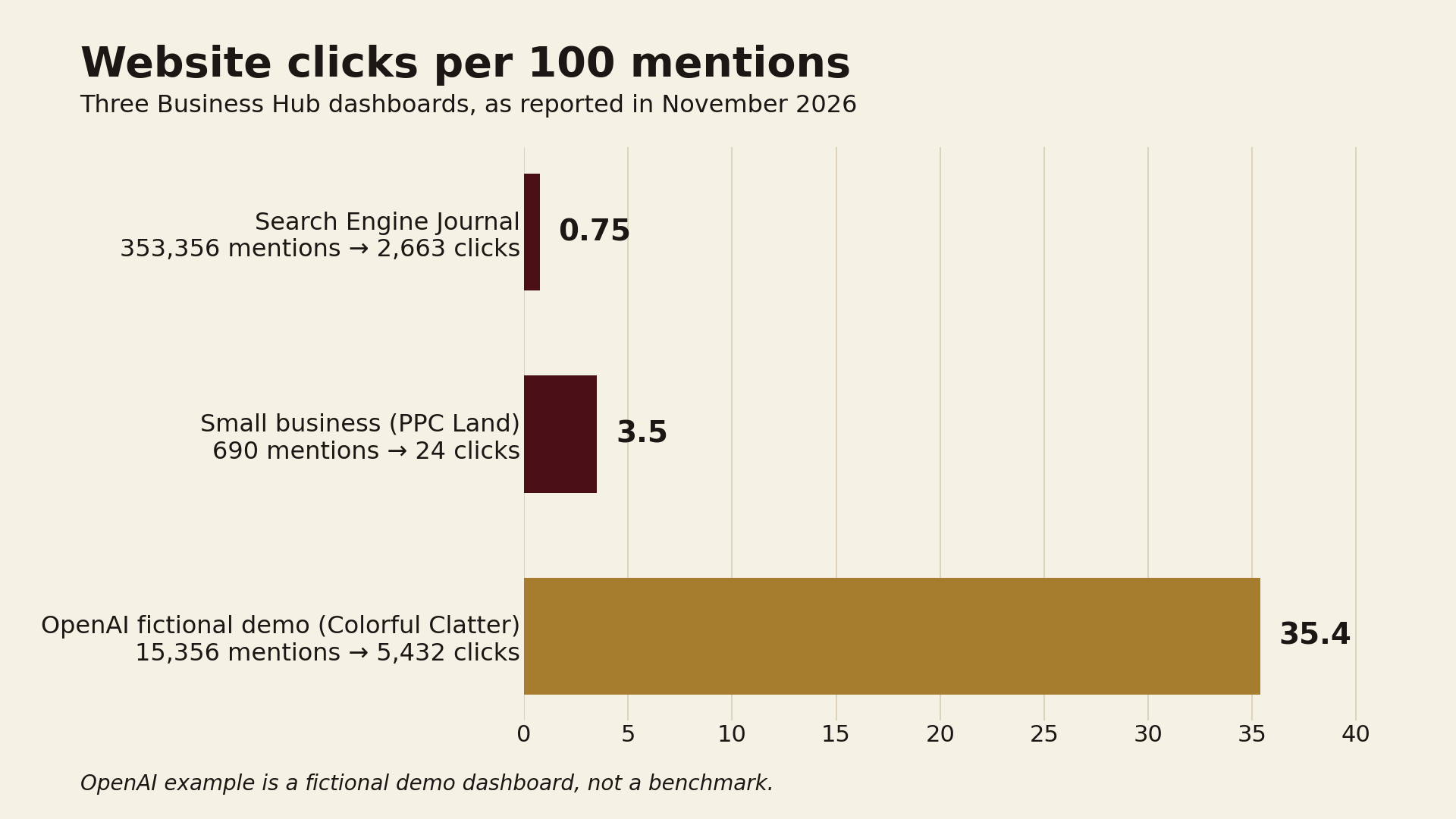
The demo is fiction, a made-up toy shop OpenAI built to show the dashboard, and the same screen showed 1,234 profile views. The small business is one anecdote; the same report had another with 28 mentions and one click. Do not benchmark your ratio against any of them. A mention means ChatGPT pointed at your website. A click means someone clicked through. A recorded click is not a confirmed visit. Most people read the answer and never click.
The gap is the mention that never gets counted. Your brand name can sit in an answer with the link going to a review site, and the Hub records nothing. LLM Pulse shared the cleanest example: ChatGPT recommended two brands by name, then linked a retailer four times, and the retailer collected the mentions.
That gap is why the Hub pairs with the work I already do. My prompt panel runs the same money questions across ChatGPT, Gemini, Perplexity and Claude, logged in and logged out, three samples each, logging whether the answer names the brand, links the site, or cites someone else. The panel samples the brand-name mentions the Hub misses: a mention with no link is visibility you cannot measure in the Hub.
Read mentions as how often you are in the conversation. Read clicks as the floor: they undercount every buyer who sees your name and calls later. My panel logs the same shape every week: the answer names a brand, links a review site, and the review site gets the click. Compare the Hub's clicks against the ChatGPT referrals in your analytics.
How to claim it
Checking eligibility takes about ten minutes. Search for your business and pick the existing listing, or create one if you are eligible. Prove your connection with a code by text or voice call to your business phone, a code to your business email, a DNS text record, or your Shopify store. OpenAI reviews the claim and emails a decision. Then pass the Persona identity check: a government-issued ID, business registration details, and proof you can represent the business. Until Persona approves you, you cannot edit the profile, connect a feed, or see insights.
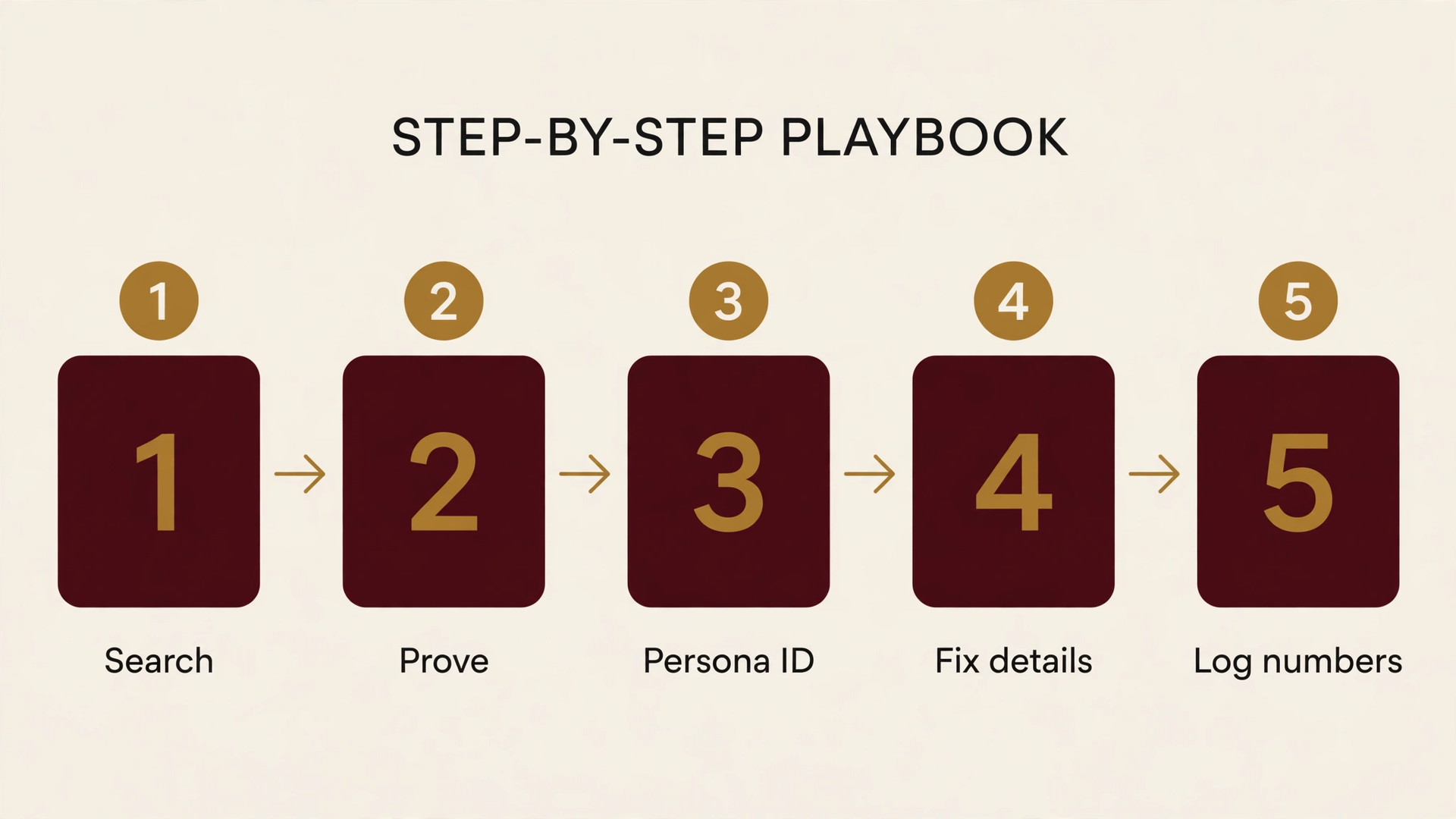
Three traps sit in that sequence. First, approval automatically publishes a new profile created through Persona, so check the details before you submit. A published profile cannot be deleted. Second, the identity check ties the profile to a person. Claim it under an owner's login on a company email, not an employee's personal account or an agency login. The claiming admin can invite teammates and an agency on their own accounts. A wrongly claimed profile can be disputed through the Dispute Ownership option in the Hub. I ran the same discipline on Google Business Profile for a Winnipeg therapy clinic campaign I led at First Rank, where calls rose 300%. The profile carried the facts Google trusted. Third, eligibility is uneven in Canada right now. OpenAI says any eligible business where ChatGPT is available can claim, and eligibility depends on industry, location, and its own checks. Stealth Digital put it plainly: a manufacturer selling beyond its own town has a reasonable shot, while a contractor serving one region may hit a wall. Local stores and restaurants can only claim an existing US listing. Service businesses were marked coming soon at launch, which leaves out most SaaS companies. Ten minutes tells you which side you are on.
Once you are in, correct your description, category, and hours, and treat the profile as the details you control. ChatGPT may still pull from other sources, so fix wrong details where they live too. Online stores can add a product feed by CSV, hosted file, or Shopify. Keep the feed matched to your live product pages. Different prices in the feed and on the site turn a recommendation into a complaint.
Business Agents are limited to eligible US ecommerce and online service businesses. An agent answers from your instructions and product feed. It cannot take payment, make bookings, or look up orders, so shoppers still buy on your website.
The check the Hub cannot run
Discovery topics, the themes of the conversations ChatGPT already brings you into, are the to-do list. If every topic sits on one service, that is the page ChatGPT can read. The services it never brings you up for are the pages you have not built yet. I write one page per service, in customers' words. The therapy clinic campaign taught me that: the page that names the service plainly gets the call.
Claiming a profile does not make ChatGPT mention you more. OpenAI says claiming "should not have an impact" on how often you get mentioned or cited. Its help center adds the limit: claiming lets you manage the information you provide, and it "doesn't guarantee increased visibility or give you direct control over ChatGPT's independent recommendations." Nothing in OpenAI's announcement suggests claiming changes which pages get cited. ChatGPT stopped citing blogs and started citing documentation, and one-shot visibility scores lie about the same question.
Claim it this week, under your own name. Write down the 28-day mentions and the discovery topics, then check again in a month.

About the author
Dalin de Graff is a digital marketing expert based in Winnipeg, Canada, with 9 years of experience across SEO, GEO, and AI search. At First Rank, he built the agency's GEO practice and leads its work on AI search and LLM visibility. His results include +311% organic clicks, +300% calls, and +98% AI search traffic in 30 days. He writes about search, AI, and marketing at dalindegraff.com.